

Follow the latest updates on Afghanistan here
Twenty years of blood, sweat, death and destruction has culminated in the Taliban’s breathtaking recapture of Afghanistan.
It is a bitter pill for the nearly one million Americans who served in Afghanistan and the hundreds of thousands of veterans from other countries who joined the US in their two-decade war.
“It just makes me mad,” said John Baird, a retired lieutenant colonel in the US Army, who served in Kandahar between September 2012 and July 2013.
Mr Baird, 59, was the provost marshal of Kandahar for nearly a year, a position that is equal to chief of police.
When he thinks of his time in Afghanistan, his first thought is “stupidity", he told The National.
“It was almost like another Vietnam to me," Mr Baird said. "We didn't seem like we were going to win this war.”
Despite the Taliban’s rapid gains over the past several days, the administration of US President Joe Biden has maintained its commitment to have all US troops out of Afghanistan by August 31.
Mr Baird said that was a mistake.
“To me, right now would be the time to attack," he said. "I realise the Biden administration wants out but the Biden administration is making a bunch of mistakes. Right now is the time to attack."
That appears to be unlikely. On Sunday, US Secretary of State Antony Blinken appeared on US TV defending the Biden administration's handling of the US withdrawal and assigned blame to the Afghan government and military.
“We had invested, over four administrations, billions of dollars, along with the international community in the Afghan security and defence forces, building a modern military with the most sophisticated equipment, 300,000 forces strong with an air force the Taliban didn't have, '' Mr Blinken told CNN.
“And the fact of the matter is, we've seen that that force has been unable to defend the country. And that has happened more quickly than we anticipated.”
While the speed of the Taliban’s takeover has startled many, it has also left some veterans dejected and wondering whether it was worth it.
“It's just surprising how fast this has unfolded,” said retired Canadian major general David Fraser, who led the Nato mission in Afghanistan’s south in 2006.
“[It happened with] spectacular speed and [is] illustrative of the weakness of the Afghan government versus the determination by the Taliban leadership, and how connected the Taliban leadership are with all the tribes.”
-
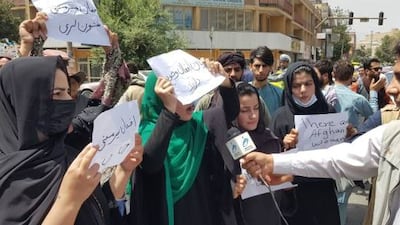
Afghan women, holding placards, gather to demand the protection of women's rights in front of the Presidential Palace in Kabul, Afghanistan. -
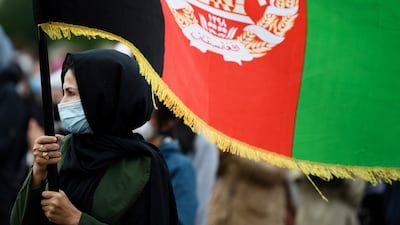
A person holds the flag of Afghanistan during a protest against support for the Taliban, in Berlin, Germany. -
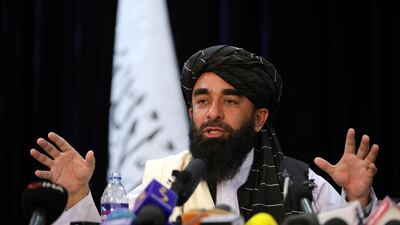
Taliban spokesman Zabihullah Mujahid speaks at his first news conference in Kabul. -
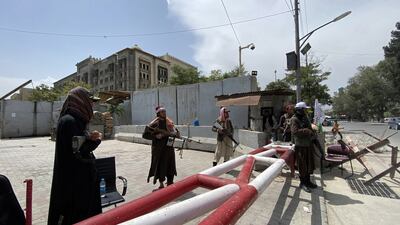
Taliban fighters stand guard outside the Green Zone where most of the embassies are situated. -
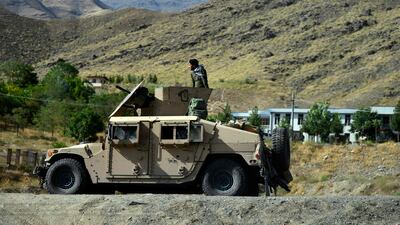
Afghan security forces patrol on humvee vehicle along a road in Bazarak town of Panjshir province. -
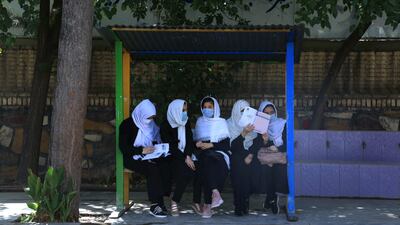
Schoolgirls sit in a schoolyard in Herat. -
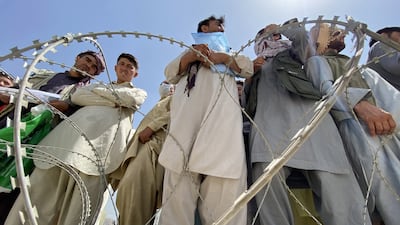
Afghans wait outside the Hamid Karzai International Airport to flee the country. -
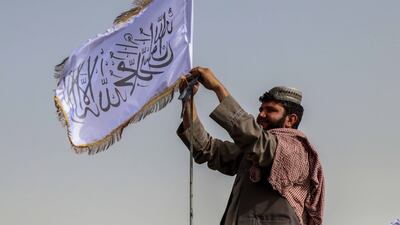
A Taliban fighter raises their flag on a vehicle as they patrol in Kandahar. -
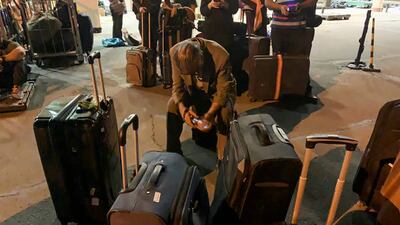
French citizens and their Afghan colleagues wait to board a French military transport plane at the airport in Kabul after the Taliban's stunning military takeover of the Afghanistan. -
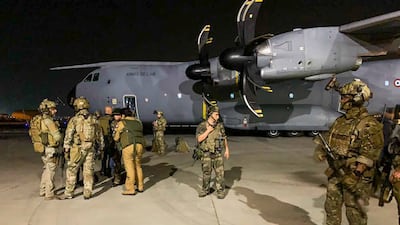
French soldiers at the airport in Kabul as they arrive to help French citizens and their Afghan colleagues to flee after the Taliban takeover. -

A US Air Force C-17 Globemaster III transport aircraft filled with about 640 Afghans fleeing to Qatar from Kabul, Afghanistan. -
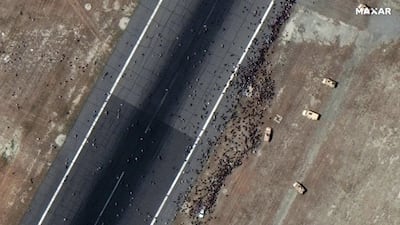
Crowds on the tarmac of Kabul International Airport, Afghanistan. Several people were reportedly killed at the airport on August 16 as Afghans tried to hang on to a moving US military plane leaving the airport. -
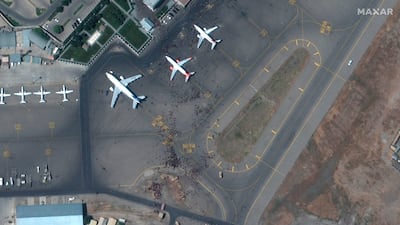
A satellite photo shows swarms of people on the tarmac at Kabul International Airport, also known as Hamid Karzai International Airport. Afghans rushed on to the tarmac of the capital's airport on Monday as thousands tried to flee the country after the Taliban seized power with stunning speed. -
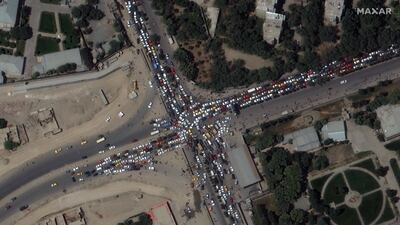
A traffic jam outside Kabul International Airport, Afghanistan after Taliban co-founder Abdul Ghani Baradar declared victory and an end to the decades-long war in the country. President Ashraf Ghani fled and conceded that the insurgents had won the 20-year war. -
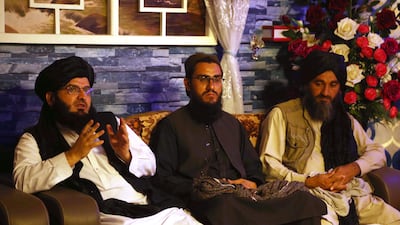
Qari Muhammad Hanif, centre, director of the Taliban's cultural and Information department, talks to journalists in Jalalabad, Afghanistan. -
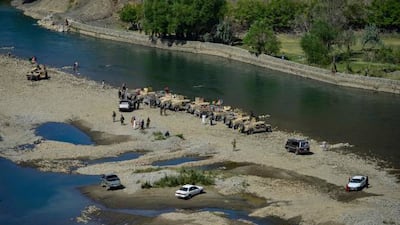
Humvee vehicles from the Afghan Security Forces in Panjshir province, Afghanistan. -
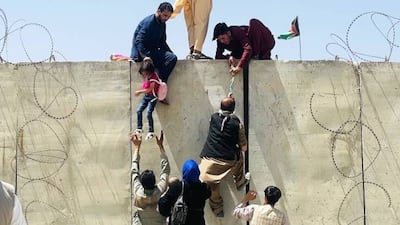
Thousands of Afghans rushed to Hamid Karzai International Airport in an attempt to flee the Afghan capital, Kabul. -
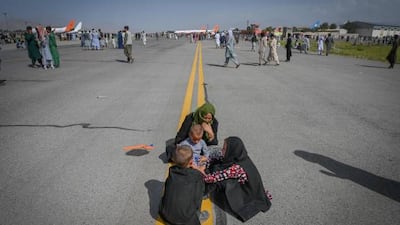
Afghans on the tarmac at Kabul airport in Kabul after a swift end to the 20-year war in the country. Thousands of people mobbed the city's airport trying to flee the group's rule. -
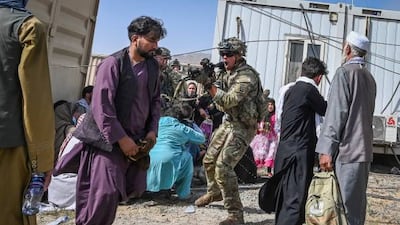
A US soldier keeps close watch on Afghan passengers at Hamid Karzai International Airport, Kabul. Thousands of people packed the airport trying to flee Taliban rule. -
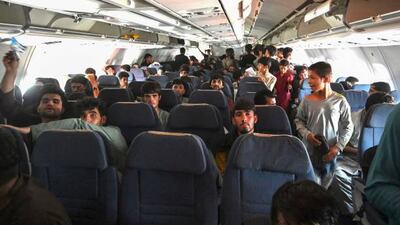
Passengers sit inside a plane as they wait to leave the runway of Kabul after the stunningly swift end of Afghanistan’s 20-year war. -
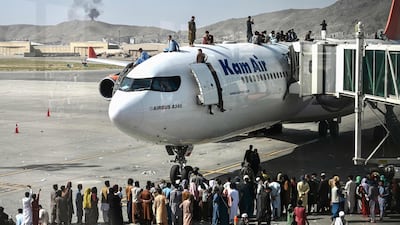
People climb on top of a plane in Kabul. -
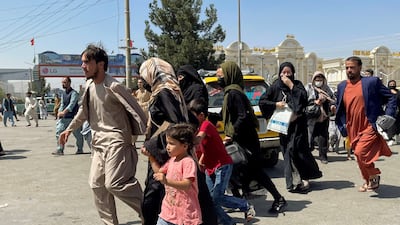
People try to enter Hamid Karzai International Airport in Kabul, Afghanistan. -
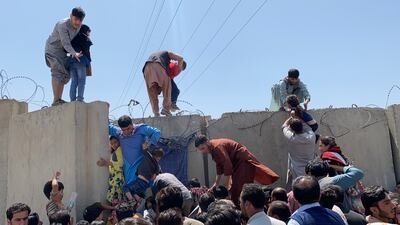
People cross the boundary wall of Hamid Karzai International Airport to flee the country after rumours that foreign countries were removing people even without visas. -
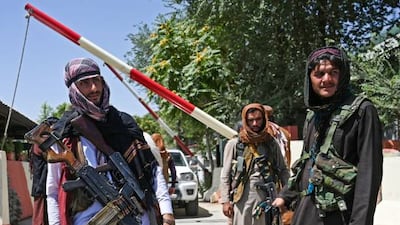
Taliban fighters stand guard along a roadside near Zanbaq Square in Kabul. -
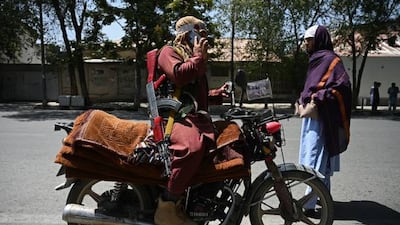
A Taliban fighter sits on his motorcycle by a road in Shahr-e Naw, Kabul. -
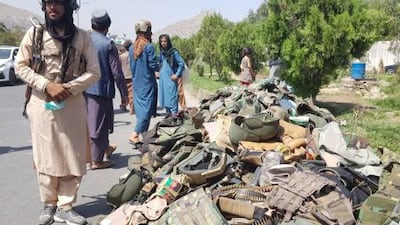
Talibs patrol the streets of Kabul as the militants take control of Afghanistan. after President Ashraf Ghani fled the country. -
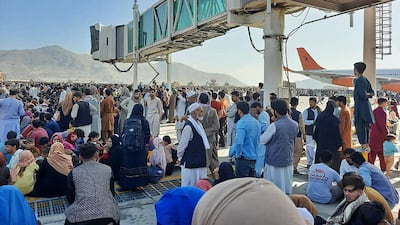
Afghans gather on the asphalt at Hamid Karzai International Airport, Kabul. -
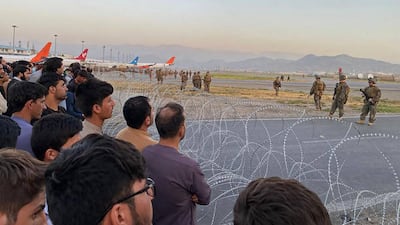
Afghans gather by the runway in Kabul as US soldiers stand guard. -
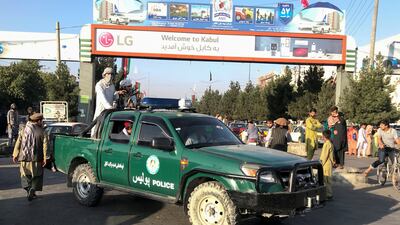
Taliban fighters on a police vehicle outside Hamid Karzai International Airport in Kabul, Afghanistan. -

Baradar Akhund, a senior official of the Taliban, with a group of men, makes a video statement. -

Taliban fighters take control of the presidential palace in Kabul, after Afghanistan's President Ashraf Ghani fled the country. -
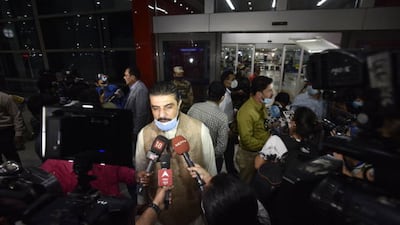
Passengers from Kabul arrive at Indira Gandhi International Airport in New Delhi, India. -
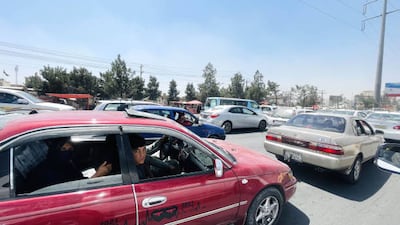
Families on a motorway trying to flee Kabul. -
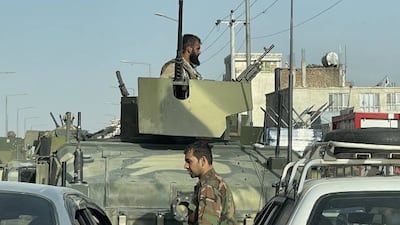
Afghan security forces on patrol in Kabul. -
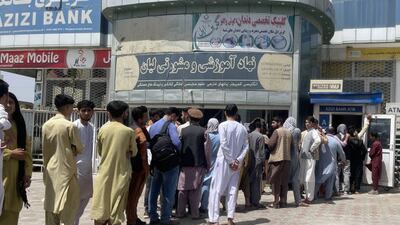
People line up outside Azizi Bank to withdraw cash during a run on deposits. -
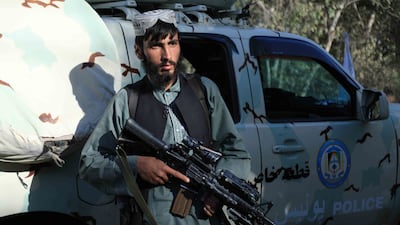
Taliban fighters use a captured Afghan security forces vehicle at a checkpoint in Herat. -
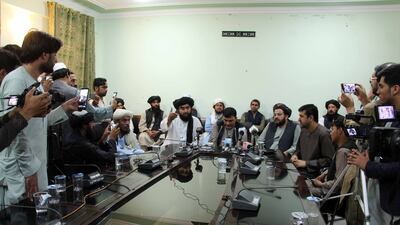
Ahmadullah Muttaqi, centre left, the Taliban's director for information and culture, addresses journalists. -
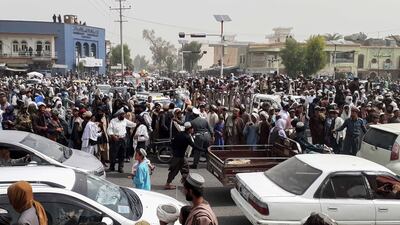
Police officers conduct their duties after the Taliban took control of Kandahar. -
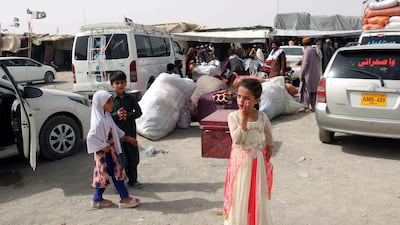
People prepare to cross into Afghanistan, at Pakistan's Chaman border. Pakistani authorities reopened the border with Afghanistan on August 13 after it had been closed for several days. -
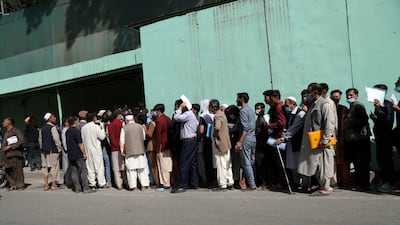
Afghans wait in long lines for hours to get visas at the Iranian embassy, in Kabul. -

Taliban fighters patrol after taking control of Jalalabad. -
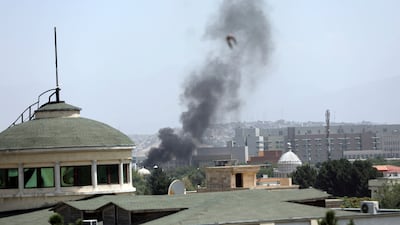
Smoke rises near the US embassy in Kabul. Taliban fighters reached the outskirts of the Afghan capital on Sunday. -
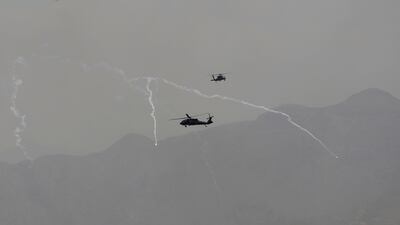
Anti-missile decoy flares are used by US Black Hawk military helicopters, while a surveillance blimp flies over Kabul. -
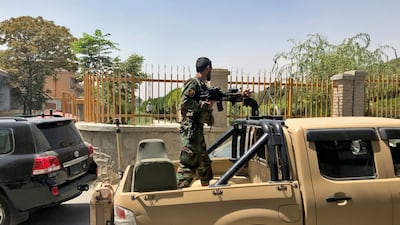
An Afghan soldier keeps watch on a street in Kabul. -
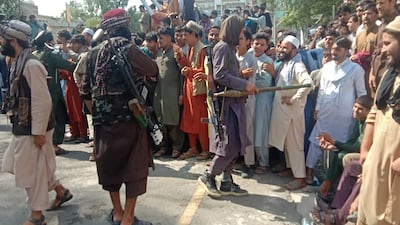
Taliban fighters and local people gather in Jalalabad province, east of Kabul. -
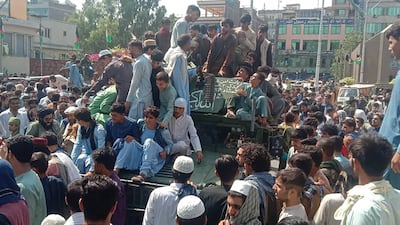
Taliban fighters sit on an Afghan Army Humvee in Jalalabad province. -
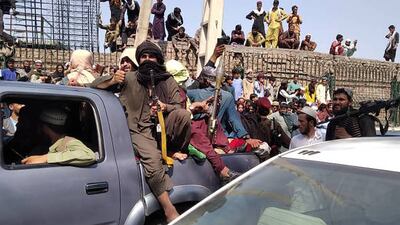
Taliban fighters travel along a street in Jalalabad province. -
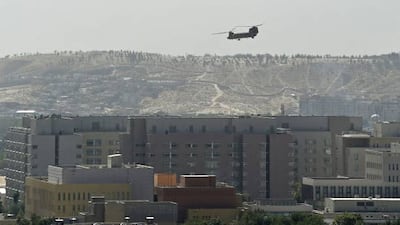
A US Chinook military helicopter flies over the US embassy in Kabul. -
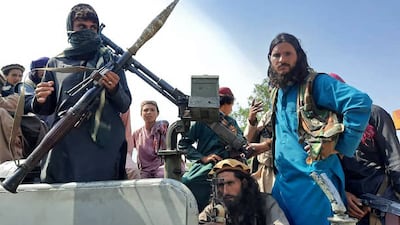
Heavily armed Taliban fighters gather in eastern Laghman province. -
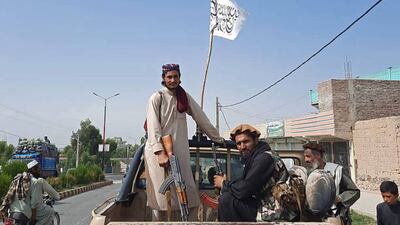
Militants wave a Taliban flag from the back of a pickup truck in Jalalabad. -
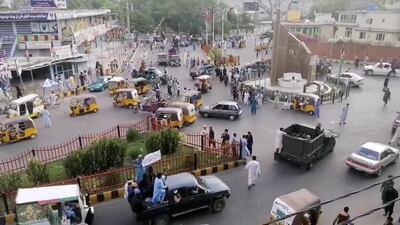
Taliban fighters drive through the streets of Laghman province. -
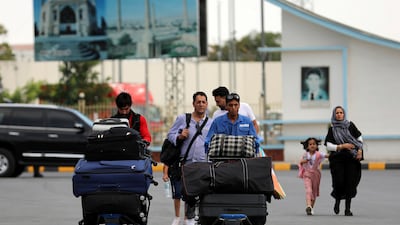
People head to the departures area of Hamid Karzai International Airport in Kabul as the Taliban approach the city. -
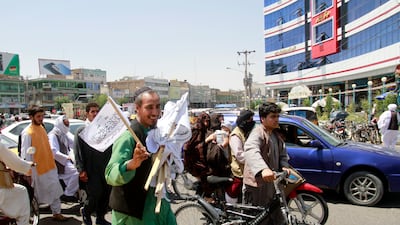
A man sells Taliban flags in western province Herat. -
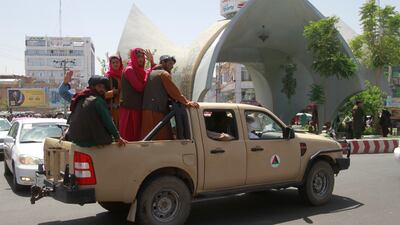
Taliban fighters travel in an Afghan Army vehicle in Herat. -
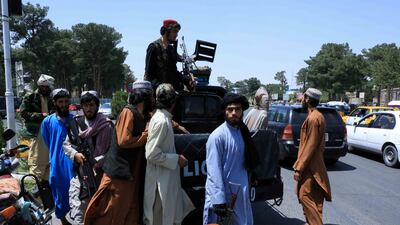
Taliban forces patrol a street in Herat. -

Taliban militants raise their flag as they gather a day after taking control of key southern city Kandahar. -

Members of the Afghan security forces stand guard along the roadside in Panjshir province. -

Afghanistan's President Ashraf Ghani and acting defence minister Bismillah Khan Mohammadi visit a military site in Kabul. -
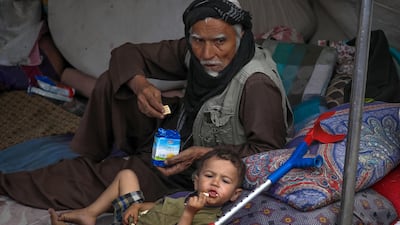
Internally displaced families from northern provinces take shelter in a public park in Kabul. -
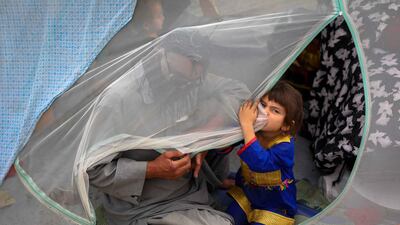
Families that fled their homes because of fighting between the Taliban and Afghan security forces take shelter in a public park in Kabul. -

Many of those seeking safety in Kabul have been sleeping on the streets. -
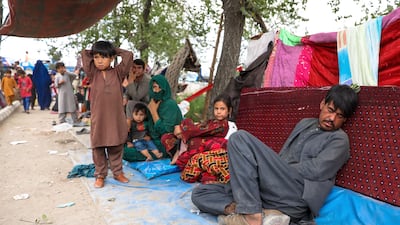
Thousands of those internally displaced have been arriving in Kabul. -
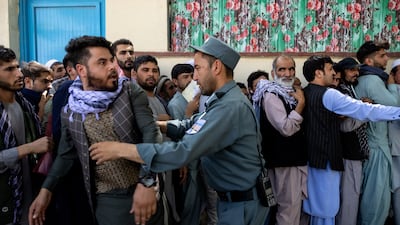
Afghans have been waiting for hours in long queues outside the passport office in Kabul, with many people desperate to leave the country.


Mr Fraser called the past few days “gut-wrenching". Today, his thoughts are on the men and women who served under him and especially those who never made it home.
“It's opened up many memories for the 40,000 Canadians who served there, the 158 men and women who had their lives taken," he told The National.
"There are probably families asking the question, 'Was it worth it?'”
That is the question Josh Makuch is asking himself. The retired captain in the Canadian Armed Forces served as a rifle platoon commander in Kandahar in 2009.
“It really does beg the question of what was the point of all this,” Mr Makuch told The National. “It feels terrible.”
The hardest part for him is knowing that Afghans who risked their lives to help him and his fellow soldiers face a dangerous and uncertain future in a Taliban-controlled Afghanistan.
“The end result is that there are people that supported us that are going to stay there, and they are probably going to be executed. So I feel deeply sad and disappointed about that,” Mr Makuch said.
The Canadian government has pledged to take in 20,000 refugees from Afghanistan, but has yet to offer a clear explanation as to how they intend to get the Afghans who worked with Canadian soldiers to safety.
“We will continue to work to get as many Afghan interpreters out as quickly as possible as long as the security situation holds,” Canadian Prime Minister Justin Trudeau said on Sunday.
But Mr Makuch said the government had months to get the interpreters out before the situation unravelled and failed to do so.
While the past few days have been difficult for many veterans, some are finding solace in knowing that at last the US will finally be out of Afghanistan.
“I feel very confident that it's time for our troops to come home,” said Fausto Parra, a veteran who served in Afghanistan with the 82nd Airborne Division in 2003. Mr Parra is now a transition assistance adviser for other veterans.
He said it was time to focus on veterans' “well-being and their health".
Mr Parra believed the US succeeded in its ultimate mission, which was to eliminate Osama bin Laden.
“In my personal opinion, being that both wars were in my generation, we feel accomplished and successful because we were able to eliminate both our targets, which was at the time bin Laden, and then second, the focus on Saddam Hussein,” he told The National.
As the US rushes to get its remaining embassy staff to safety, for many the past few days have been reminiscent of the fall of Saigon in 1975.
And now, a whole new generation of American, Canadian and international veterans are left to wonder: “What was the point?”

